


Signs Your Business Needs a Digital System
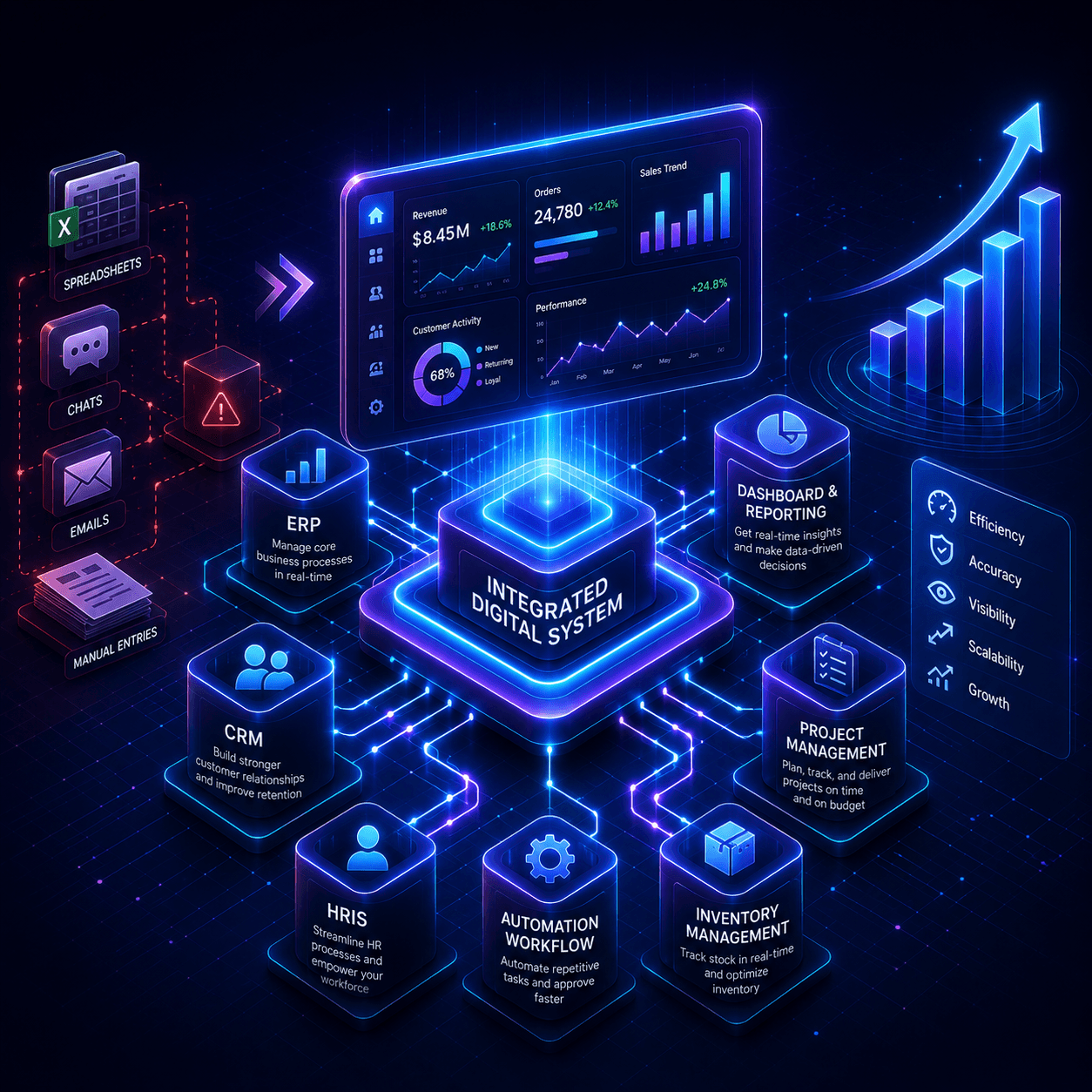
In the early stages of running a business, many operational processes can still be handled manually. From managing sales data in spreadsheets and approving tasks through chat applications to coordinating teams via messaging platforms, these methods may seem sufficient at first.
However, as a business grows, manual processes often become one of the biggest obstacles to scaling operations efficiently.
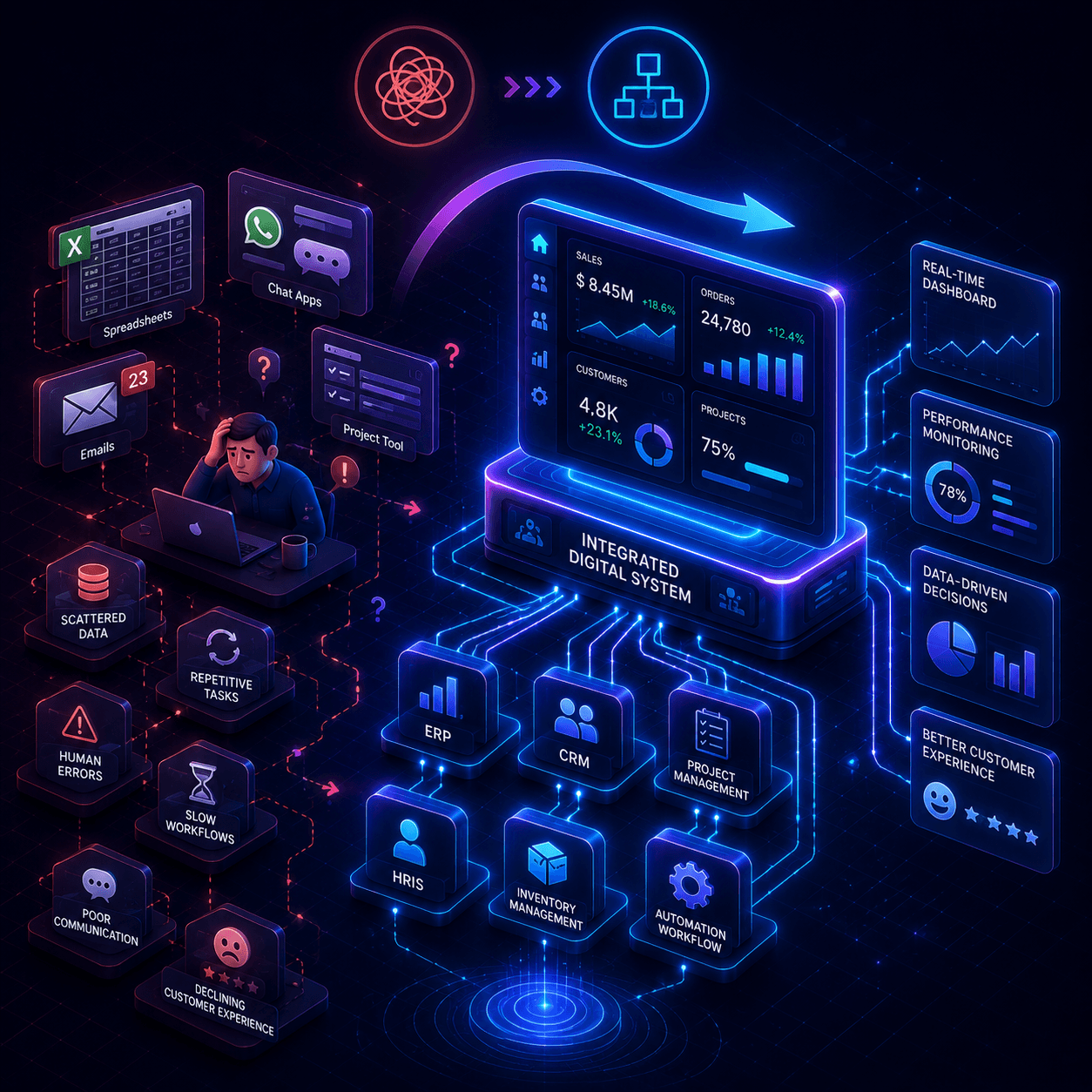
Many companies fail to realize that repetitive tasks, human errors, slow workflows, and poor interdepartmental communication are actually clear signs that the business needs a digital system.
So, what are the signs your business should start investing in digital transformation?
1. Business Data Is Scattered Across Multiple Platforms
Is your sales data stored in spreadsheets, customer information in chat apps, reports in emails, and project progress in different tools?
This situation is very common in growing businesses. Unfortunately, scattered data creates inefficiencies and makes it difficult to access accurate information in real time.
As a result:
- Teams spend more time searching for information
- The risk of data loss increases
- Different departments may work with inconsistent data
- Decision-making becomes slower
A digital system helps centralize and integrate business data into a single platform for better accessibility and management.
2. Operations Become Overwhelmed as the Business Grows
Increasing sales should be a positive sign. But if every increase in demand causes operational chaos, your business processes may not be ready to scale.
Common signs include:
- Slow approval processes
- Too many repetitive manual tasks
- Increasing customer complaints
- Frequent overtime work
- Difficulty tracking project progress
Without the right operational system, business growth can quickly create internal inefficiencies.
3. The Business Depends Too Much on Certain Employees
If operations become disrupted whenever a specific employee is absent, your business likely has a high dependency on individuals rather than systems.
This creates operational risks and limits scalability.
A digital system helps businesses create structured workflows and documented processes so operations can continue smoothly regardless of who is handling them.
4. Human Errors Happen More Frequently
Data entry mistakes, missed follow-ups, incorrect reports, and communication errors are common in manual operational systems.
As the business grows, even small mistakes can have a significant impact.
Digital systems help automate repetitive tasks and reduce the likelihood of human error across operational processes.
5. It’s Difficult to Monitor Performance and Progress
Many business owners struggle to track:
- Team productivity
- Project progress
- Operational performance
- Real-time sales data
- Ongoing business issues
As a result, decision-making becomes delayed because management depends heavily on manual reporting.
With integrated dashboards and digital systems, businesses can monitor operations in real time and make faster, data-driven decisions.
6. Customer Experience Starts Declining
Disorganized operations often directly impact customer experience, such as:
- Slow responses
- Inconsistent information
- Complicated service processes
- Delayed follow-ups
Today’s customers expect fast and seamless service experiences. This is why having a reliable operational system is essential for maintaining customer satisfaction.
Why Digital Systems Are Important for Business Growth
Digital systems are not simply about following technology trends. More importantly, they help businesses become:
- More efficient
- More scalable
- More measurable
- Faster in decision-making
- Better prepared for business growth
With the right system in place, businesses can reduce manual workloads and focus more on strategic growth.
Conclusion
Many businesses fail to scale not because of a lack of sales, but because their operational systems are not prepared for growth.
If your business is experiencing several of the signs above, it may be time to consider implementing a digital system to support healthier and more sustainable growth.
In today’s business environment, digital systems are no longer just operational support tools — they are the foundation for scalable and efficient business operations.
SHARE
SUBSCRIBE
Subscribe to our newsletter & articles.